How to Plant and Grow Heliotrope
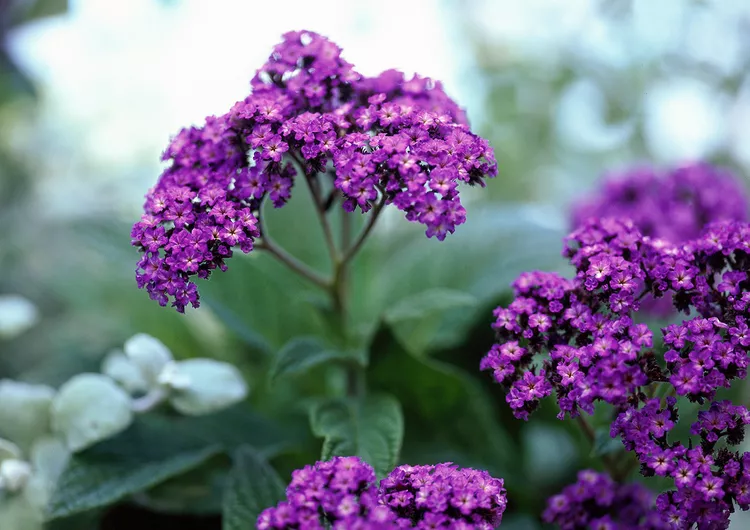
An old-fashioned plant that has seen a resurgence in popularity, heliotrope is often first found by scent rather than sight. Clusters of small purple or blue blooms top off dark green foliage. Those flowers have a sweet scent likened to pleasant aromas of vanilla, baby powder, grapes, or cherry pie. Pollinators love these flowers, too.
Heliotrope's abundant flower clusters add a splash of color to a container garden or a flower bed. The most common hue is a deep, rich purple, but when you look closely at the blooms, they have several shades of purple with tiny yellow centers. There are also white variations of these blooms and some pale lavender heliotropes to go along with the deeper purple shades.
Long, deeply veined leaves provide texture that acts as a lush backdrop for the fragrant heliotrope blooms. Overall, the plant has an almost shrubby appearance. These plants can be almost completely covered in blooms during summer and create quite a "scent-sation."
All parts of heliotrope plants are toxic to humans and horses.
Heliotrope Overview
| Genus Name | Heliotropium |
| Common Name | Heliotrope |
| Plant Type | Annual |
| Light | Sun |
| Height | 1 to 4 feet |
| Width | 1 to 2 feet |
| Flower Color | Blue, Purple, White |
| Foliage Color | Blue/Green |
| Season Features | Fall Bloom, Summer Bloom |
| Special Features | Fragrance, Good for Containers, Low Maintenance |
| Zones | 10, 11 |
| Propagation | Seed, Stem Cuttings |
Where to Plant Heliotrope
Plant heliotrope in organically rich, well-draining soil or potting mix in a garden bed or containers. Select locations close to outdoor activity areas so the scent can be appreciated. This plant is an annual in all but USDA Zones 10 and 11, where it grows as a tender perennial. Even in those locations, it is better grown as an annual because it tends to become straggly.
One of the best ways to use heliotrope is in containers. This way, you can move plants around so their sweet fragrance may be enjoyed often. Heliotrope is also great to plant in groups to maximize its fragrance, as it is sometimes subtle.
How and When to Plant Heliotrope
Plant heliotrope transplants after the last frost in spring in a location that receives at least six hours of sun daily, preferably in the morning. Dig a hole about the same width and depth as the planting container. Remove the plant and loosen the roots a bit from the root ball before placing it in the hole. Backfill with soil, tamp lightly, and water well. Space heliotrope plants 12 to 18 inches apart.
Heliotrope Care Tips
A heliotrope plant is easy to grow and will fill your garden with blooms and fragrance as long as its basic needs are met. Don't let plants dry out, and make sure plants get adequate drainage to keep them healthy and thriving.
Light
The plants are happy with full sun and moderate moisture but can tolerate a bit of shade. In a shadier spot, the plant may not bloom quite as much.
Soil and Water
The plants perform best in fertile, well-drained soil; they don't do well in heavy clay. When planted in containers, they prefer moist, loamy soil.
Heliotrope plants love water, so keep the soil moist. When planted in a container, heliotrope requires frequent watering. Water early in the day, and avoid getting the plant's leaves wet to reduce the chance of fungus. You'll know you're overwatering your heliotrope if you see brown spots on its leaves, which is a sign of root rot.
Fertilizer
In the garden, fertilize heliotrope plants monthly using a fertilizer high in phosphorous to promote more blooms. When planted in containers, heliotrope plants benefit from applying liquid fertilizer every two weeks.
Pruning
Because the flowers bloom in large clusters, they may need some periodic deadheading of old blossoms to make way for more. You can also prune back the plant by about half its size to encourage bushy new growth and flower buds to form.
Pests and Problems
When planted in the optimum conditions, heliotrope has few pest problems, although it may attract mealybugs, white flies, aphids, and spider mites.
Heliotrope is relatively problem-free, but in a humid summer, if planted in some shade, it can be susceptible to powdery mildew. This appears on the foliage of the plants as a powdery white substance. Powdery mildew generally will not kill the plant but can slow its growth. To help prevent this, plant heliotrope in as much sun as possible and make sure there is good airflow around the plants. Also, avoid getting the foliage wet when watering, especially in the evening.
How to Propagate Heliotrope
Heliotrope can be propagated with cuttings or seeds. Cuttings deliver a plant identical to the parent, whereas seeds may not. Select a 5-inch section of stem and cut just below a leaf. Then remove the leaves on the bottom half of the cutting and dip the end in rooting hormone powder. Insert the cutting into a moist planting medium. Place the cutting in bright indirect light and water frequently to keep the medium moist. The cutting will begin developing a root system in a few weeks.
To start with seeds, you need a soil warming mat for successful germination. Keep the planting medium moist, and the seeds should germinate in four to six weeks.
Types of Heliotrope
The most common type of fragrant garden or container-grown heliotrope plants are cultivars of Heliotropium arborescens.
'Fragrant Delight' Heliotrope
Heliotropium 'Fragrant Delight' bears soft purple, highly fragrant flowers on 3-foot-tall plants.
Heliotrope Companion Plants
Angelonia
Angelonia is also called summer snapdragon, and once you get a good look at it, you'll know why. It has salvia-like flower spires that reach a foot or two high, but they're studded with fascinating snapdragon-like flowers with beautiful colorations in purple, white, or pink. It's the perfect plant for adding bright color to hot, sunny spaces. This tough plant blooms all summer long with spirelike spikes of blooms. While all varieties are beautiful, keep an eye out for the sweetly scented selections.
While most gardeners treat angelonia as an annual, it is a tough perennial in Zones 9-10. If you have a bright, sunny spot indoors, you can keep it flowering all winter.
Duranta
This unusual annual has beautiful blue-and-white flowers that are almost orchidlike in their beauty. A tropical shrub in the warmest parts of the country, Zones 8-11, duranta is grown in the rest of the country as an annual. It delights gardeners with its airy clusters of blue, violet, or white flowers followed by golden fruits. Plant it in a container, and come fall, it will make a good indoor plant in a large, sunny, south-facing window. Watch for selections with variegated foliage; they add even more interest. As tropical shrubs, they can reach 15 feet or more, but when grown as annuals in cool regions, they seldom top 5 feet. Plant in spring in rich, well-drained soil after all danger of frost has passed. Fertilize moderately. Keep moist, but do not overwater.
Licorice Plant
The elegant, silvery licorice plant is useful for setting off flowers in blue, white, purple, and other colors and adding contrast to plantings where you want more than just a mass of green. It's especially good in containers, where you can admire it up close and show off its spreading habit to the best effect. Technically a tropical shrub, licorice plant is usually grown as an annual in the United States. It does best in full sun and well-drained soil.
Garden Plans for Heliotrope
Garden Plan for Partial Shade
This garden plan combines easy, adaptable plants to add color to spots that don't see full sun.