
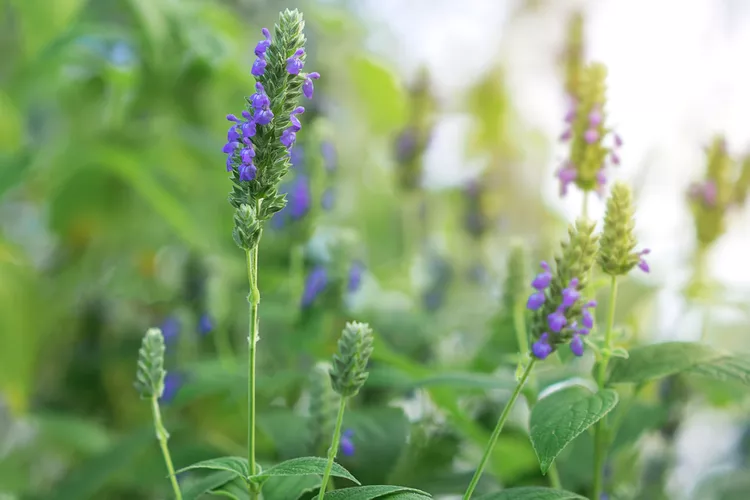
Chia seeds are widely promoted as a superfood in pudding, jam, and baked goods. You’ve also likely heard of chia in relation to the wacky “pets” that feature the sprouting plants as hair or fur on a terra-cotta figurine. Fortunately, you don’t need a gimmicky kit in the shape of a cute creature to grow versatile chia plants (Salvia hispanica). Whether you want to know how to grow a chia plant from seed and add the sprouts to your salad or grow them to maturity, you’ll find these plants are well worth the time and space in your garden.
Chia Overview
| Genus Name | Salvia hispanica |
| Common Name | Chia |
| Additional Common Names | Mexican chia, Salba chia |
| Plant Type | Annual |
| Light | Sun |
| Height | 3 to 5 feet |
| Width | 2 to 3 feet |
| Flower Color | Blue, Purple |
| Foliage Color | Blue/Green |
| Special Features | Low Maintenance |
| Zones | 10, 11, 8, 9 |
| Propagation | Seed |
| Problem Solvers | Drought Tolerant |
Where to Plant a Chia Plant
Chia plants are annuals native to Central America. They grow best in warm climates, such as the southeastern U.S. or USDA Hardiness Zones 8-11. A chia plant can reach 3 to 5 feet tall and several feet wide in one season, so it needs a location with plenty of space.
How and When to Plant a Chia Plant
Learning how to grow a chia plant is easy when planting seeds in areas with mild winters. In the fall, soak chia seeds in water until their gel coatings absorb as much water as they can, after which they look a bit like frog eggs. Use a spoon to scoop up two or three seeds and set them on the surface of a prepared garden bed, spaced about three feet apart. Cover the seeds lightly and water daily until they sprout and begin growing vigorously in five to seven days.
Chia Plant Care Tips
After they are established, chia plants are very low-maintenance. They can spread quickly, so keep an eye on them and stop them from overtaking other plants in your yard. They aren’t considered invasive and can quickly be controlled if needed with common herbicides.
Light
Chia plants need at least eight hours of full sun daily.
Soil and Water
Chia plants tolerate a wide range of soils, from sandy to clay, but the soil must drain well, or the roots may rot.
Seedlings and young plants need ample water. After the plants have fully established root systems, they are drought-tolerant and thrive in midday heat. Allow the soil to dry between waterings to help avoid root rot.
Temperature and Humidity
Chia plants grow best in warm weather, with temperatures between 70°F and 85°F. They can survive chilly temperatures that reach the low 50s but are not cold hardy. Chia plants don’t have stringent humidity requirements but are known to do well in high-humidity environments.
Fertilizer
Chia doesn’t require fertilization when planted in rich soil. In poor soil, dig in some compost at planting time.
Potting and Repotting a Chia Plant
Chia plants can grow indoors in containers, but they require at least six hours of direct sun daily, so they need a sunny windowsill or grow lights. Select a terra-cotta pot with good drainage and fill it with commercial potting soil with some added sand. This annual doesn’t require repotting; just start over with fresh seed and soil in the same pot each year.
Pests and Problems
One particularly fantastic aspect of chia plants is their disease tolerance, lending them well to sustainable agricultural practices, particularly in desert regions. Any pests that attack them can often be treated with a mild organic pesticide such as neem oil.
How to Propagate a Chia Plant
Chia plants are prolific self-seeders, so they produce a new crop of plants each year without help.
Harvest Tips
To harvest the seeds for future crops (or for eating), deadhead the flowers at the end of the season after they dry out and the petals fall off. Put the flowers in a paper bag to preserve the seeds. When completely dry, crush the seed heads in the bag to release the seeds.