
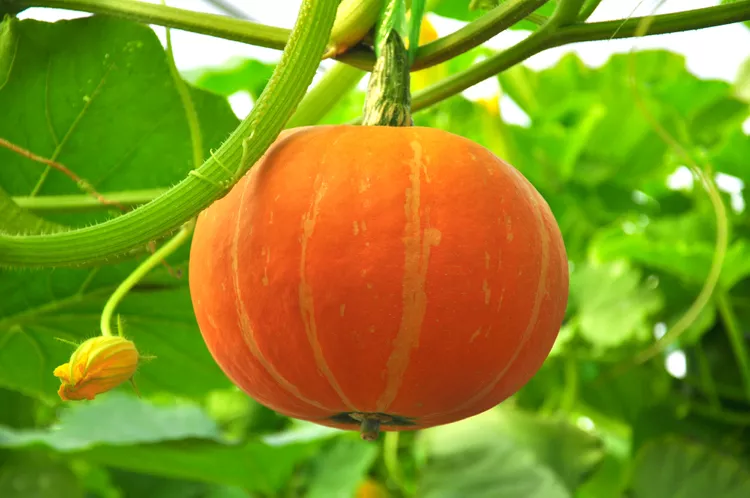
With their massive fruit and sprawling vines, pumpkins can take up a lot of room in gardens. However, growing pumpkins in containers is a way to reduce their footprint so you can fit them into a smaller garden. Keeping potted pumpkins takes a little more work, but with the right supplies and some know-how, you can grow both carving and pie pumpkins in a small-space patio, balcony, or rooftop garden. Use these 12 tips to get started.
1. Choose Small Pumpkin Varieties
Some pumpkin varieties are better suited for container growing than others. When growing pumpkins in a small space, look for miniature and sugar pie pumpkins, as well as pumpkins that maintain a bush-like growth habit. Some of the best pumpkins for container gardens are ‘Jack Be Little’, ‘Spooktacular’, ‘Small Sugar’, and ‘Baby Boo’.
2. Use a Big Pot
Even small pumpkins need plenty of room to grow, so choose a roomy planter. A single miniature pumpkin plant might grow in a 10-gallon container, but pumpkins grow much better in 20- to 25-gallon pots. Make sure the container you choose has plenty of drainage holes in the base to prevent water-logged roots.
3. Add a Rich Potting Mix
Garden soil is not recommended for container gardens because it can become dense and impair water flow in pots. Instead, fill pumpkin pots with a mixture of 1 part potting mix (or raised bed potting soil) and 1 part compost, plus a dose of slow-release fertilizer. Pumpkins are heavy feeders, and mixing compost and slow-release fertilizer into their soil provides plenty of nutrients to roots as they grow.
4. Plant at the Right Time
Unless you’re growing pumpkins in a greenhouse, don’t sow pumpkin seeds until after your last frost date of spring. To plant, sow two to four pumpkin seeds per pot and bury the seeds about 1 inch deep. When the seedlings are a few inches tall and have sprouted true leaves, thin out the weakest plants and allow the strongest one or two seedlings to grow.
5. Apply Mulch
Pumpkins crave moisture, but plants grown in containers dry out quicker than plants in garden beds. Add a thin layer of natural mulch, like straw, over the soil after the pumpkin seeds sprout to keep your pumpkins growing strong. The mulch insulates the soil and prevents pots from drying out quickly.
6. Provide Plenty of Light
Pumpkins are full-sun plants that need at least six to eight hours of bright light daily. To ensure your pumpkins receive the light they need, locate your container garden in a spot that receives lots of sunlight throughout the day.
7. Try Trellising
Trellises aren’t required for growing pumpkins, but they can keep pumpkin vines from growing wild and overwhelming a small-space garden. Plus, trellising might allow you to grow more pumpkins in tight quarters.
Cattle panel trellises are handy in large gardens, but cattle panels can also be shaped into smaller cylinders or “grow towers” for container pumpkins. Train pumpkins to grow vertically on a trellis by loosely tying pumpkin vines to supports with coated wire, cotton garden twine, or plant clips. Once the plants start to fruit, add a pumpkin hammock made of netting or old pantyhose to keep vines from breaking under the weight of heavy pumpkins.
8. Water Often
Mulching can help keep soil from drying out quickly, but potted pumpkins still need to be watered more frequently than plants kept in garden beds. Pumpkins grow best in consistently moist soil and should be watered when the top 1 inch of soil feels dry to the touch.
9. Fertilize Regularly
Mixing slow-release fertilizer into your potting mix at planting time provides some nutrients for the developing pumpkin plants. However, the plants must still be fertilized throughout the growing season to remain productive.
Avoid using nitrogen-rich fertilizers on pumpkins, which can cause plants to grow lots of leaves at the expense of their fruit. Instead, apply a general, all-purpose fertilizer every few weeks until pumpkins begin to flower, and then switch to a fertilizer with plenty of phosphorous and potassium.
10. Remove Extra Flowers
Potted pumpkins will fruit, but they can’t support as many pumpkins as plants grown in garden beds. To help your pumpkins in containers grow as big as possible, remove two of every three flowers that appear on the vines. This encourages the plants to channel all their energy toward the remaining flowers to produce high-quality fruits.
Pruning off extra flowers is recommended for most pumpkin varieties. However, miniature pumpkins typically don’t need to be pruned, even in container gardens.
11. Watch for Pests
Pests are usually less problematic in containers than in garden beds, but they can still crop up from time to time. If your pumpkins develop patchy or holey leaves or if the vines and leaves wilt even when they’re well-watered, you could be dealing with insects such as squash vine borers or cucumber beetles. Also, powdery mildew can occur on potted pumpkins, but these problems are less likely to arise if you water pumpkins at soil level and keep plant leaves dry.
12. Know When to Harvest
When autumn arrives and the temperature drops, it’s time to harvest your pumpkins. You’ll know they are ready to pick when the vines start to die back and the pumpkins develop their mature coloration, which can vary depending on the variety.
If a hard frost is forecast, pick pumpkins a little early and let them ripen indoors.
Ripe pumpkins may separate from the vine naturally, but they can also be clipped off the plant with a pair of pruners. To keep pumpkins fresh for longer, leave a portion of the stem attached to each pumpkin and allow them to cure in a warm, dry place for 10 days before storing or carving them.