How to Plant and Grow Chayote
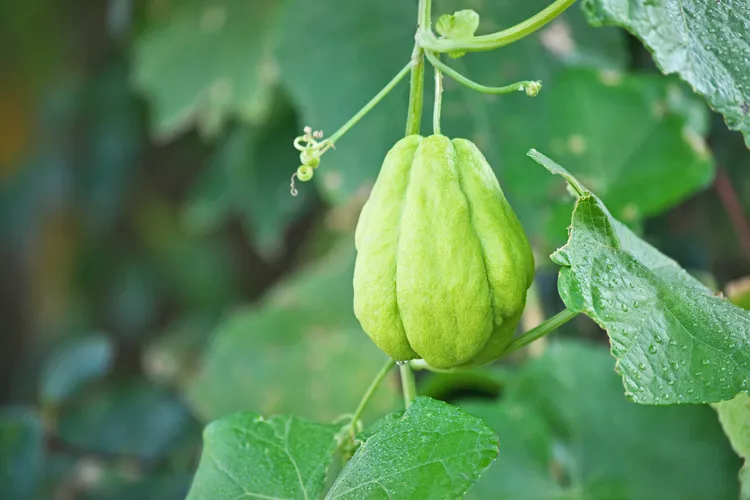
Widely cultivated throughout Central and South America, chayote squash is a bright green, pear-shaped vegetable that’s actually a member of the gourd or Cucurbitaceae family. Used in a wide variety of sweet and savory dishes, chayote has a crisp texture and a taste that is somewhere between a cucumber and an apple.
While most gardeners grow chayote for its fruit, all parts of chayote squash are edible, including tubers, stems and young leaves. Frequently used like summer squash, chayote is often featured in tacos and other Mexican fare, although it can be used in homemade sauces, juices, sautés and other dishes. This vining plant grows quite large and needs between 120 and 150 frost-free days to reach full maturity.
Chayote Overview
| Genus Name | Sechium edule |
| Common Name | Chayote |
| Plant Type | Perennial, Vegetable |
| Light | Sun |
| Width | null to 50 Feet |
| Flower Color | Green, White |
| Foliage Color | Blue/Green |
| Zones | 10, 11, 8, 9 |
| Propagation | Seed |
Where to Plant Chayote
Chayote is a large, vining plant that can grow between 20 to 50 feet in length, so it’s important to choose a garden location where you’ll have plenty of space for your chayote vines to spread. Adding a cattle panel trellis or other support can help keep your vines from sprawling.
Choose a spot in your garden that receives at least 6 to 8 hours of bright sun. Like other members of the Cucurbit family, chayote squash grows best in rich, well-draining soil that holds water well. A soil pH between 6.0 and 6.8 is best. If you’re working with nutrient-poor or poorly draining soil, enrich it with organic compost or aged manure before you plant your chayote seeds.
Gardeners in very hot climates may opt to sow their chayote in an area of their garden that receives some afternoon shade and protection from drying winds.
Because of its size and dense growth, chayote can make a perfect garden privacy screen when grown on trellises. It will also readily grow over arbors and garden arches to provide your landscape with an abundance of lush greenery.
How and When to Plant Chayote
Chayote squash can be grown from seed; however, most gardeners grow their plants from whole, store-bought chayote squash. If you want to grow chayote from a squash you purchase, look for fruit that is in good condition without skin blemishes.
Because chayote does not tolerate frost, it should only be planted outdoors about 3 to 4 weeks after your last frost date and when your garden soil has warmed to at least 65°F.
To sow your plants, dig a hole 4 to 6 inches deep and plant your whole chayote, wide side down. Place your squash at a 45-degree angle so that the top stem reaches just to the soil line. Then backfill your hole to cover your squash, but take care not to bury it too deep as this can promote rot.
A single chayote vine can generally produce enough squash for 4 people; however, if you’d like to sow more plants, space individual chayote squash or seeds at least 10 feet apart.
Chayote Squash Care Tips
As long as you have an ample growing season where you live, chayote squash can be simple plants to keep. For healthy plants, follow the tips below and remember to install a trellis at the time of planting to avoid disturbing tender vines after they sprout.
Light
Chayote squash will grow best when planted in full sun and it should receive between 6 and 8 hours of bright light daily. This plant can also grow in partial shade, although vines will produce fewer squash.
Soil and Water
Chayote will grow best in rich, well-draining soil. If needed, give your soil a nutrient boost by mixing in compost or aged manure and hilling your soil into a 4 x 4 square foot space to give your plants plenty of room to spread.
Chayote can be susceptible to rot if grown in overly moist conditions. When planting your squash, water the soil well and then don’t water again until your sprout emerges. Throughout the growing season, water your chayote deeply only once, every 10 to 14 days.
Temperature and Humidity
Chayote squash naturally grows in tropical and subtropical environments and it does not handle cold well. Thriving in heat and even some humidity, chayote needs about 30 frost-free days after flowering to produce fruit.
While it is not cold hardy, chayote can be overwintered in zones 8 and above by cutting the vines down to the ground in autumn and adding a thick layer of mulch.
Chayote can also be grown as an annual in zone 7 if it’s sown early enough in the season. Gardeners in cooler regions can grow chayote in pots and then bring plants indoors when temperatures drop.
Fertilizer
Chayote squash doesn’t need a lot of fertilizer and too much nitrogen can reduce fruit yield. Instead, fertilize your plants every 6 to 7 weeks with a balanced or low-nitrogen fertilizer to promote a larger harvest.
Pruning and Harvesting
After planting your chayote, wait until the vine develops 3 to 4 sets of true leaves and then pinch off the top tip of the plant to encourage it to branch. Throughout the growing season, vines can also be pruned as needed to keep them smaller and encourage more branching.
Chayote squash should be harvested in late summer to early fall when fruit is a bright green color. You’ll know your chayote is ready to harvest when fruit measures between 4 and 6” long and the skin is still soft like a bell pepper. Chayote that have been left on the vine too long will develop hard skin or become wrinkled and won’t be as pleasant to eat.
Pests and Problems
Aphids
Aphids can cause distorted leaf growth and leave behind a sticky "honeydew" residue on plant leaves. To rid your chayote of aphids, spray your plant with a strong blast from your garden hose or try out an organic insecticidal soap or neem oil spray.
Squash Vine Borer
Squash vine borers enter plant stems and can cause entire plants to rapidly wilt and die as they feed. To prevent squash vine borers, try planting a trap crop like Hubbard squash, rotate your crops, and use floating row covers.
Powdery mildew
Powdery mildew produces a powdery, white film on plant leaves and can cause stunted growth. To prevent mildew, keep plant leaves dry by watering at the soil line and only water your plants in the morning.
Chayote Companion Plants
Pumpkins
Both vigorously growing plants, chayote squash and pumpkins make good companions as they have similar growing needs.
Squash
Like pumpkins, other varieties of squash and zucchini will grow well with chayote and can also be supported by a shared trellising system.
Corn
Because of its size, corn can easily grow alongside chayote without needing to worry about either plant outcompeting the other for sun or other resources.