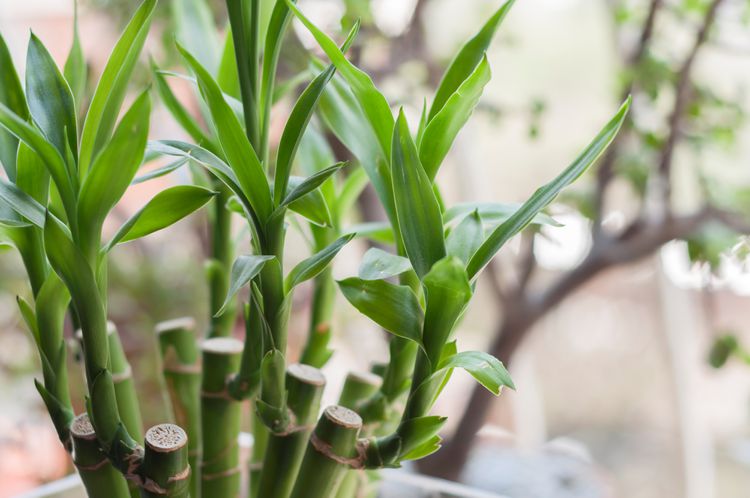
Lucky bamboo is a popular houseplant that needs little sunlight or other care to thrive. Although it's purported to bring good fortune, you may unfortunately see lucky bamboo turning yellow when growing conditions aren't matched to its requirements. Whether your plant is growing in soil or water, this guide will help you figure out what's causing the problem so your plant can back to being green.
Although they look a lot alike, lucky bamboo is not a true bamboo. It is actually a type of dracaena known as Dracaena sanderiana.
Causes of Lucky Bamboo Turning Yellow
Although lucky bamboo is easy to grow, it can become stressed and turn yellow in certain situations. Like all plants, it has its quirks. Here are some possible causes of a lucky bamboo plant turning yellow, along with fixes.
1. Watering Problems
Yes, it’s possible to overwater a plant that can live in a container full of water. A lucky bamboo that sits in soggy soil will drown because its roots cannot get oxygen. As the roots rot, its leaves turn yellow and die. If you are growing lucky bamboo in water, algae can grow in old water and compete with the plant for nutrients. As the lucky bamboo loses the nutrient war, its leaves turn yellow.
Solution: Keep the potting mix loose and well-drained when growing lucky bamboo in soil. The soil should be moist but not soggy. Only water a potted lucky bamboo when the top inch of soil is dry to the touch, and make sure the container has drainage holes. When growing lucky bamboo in water, change the water every seven to 10 days and clean the container monthly to remove bacteria. Using an opaque container blocks sunlight and slows algae growth.
2. Tap Water
Lucky bamboo is sensitive to minerals in your tap water, particularly if you grow the plant in water, rather than soil. Chlorine and fluoride—both of which are in tap water—cause lucky bamboo leaves to discolor over time and eventually cause the plant to die. Salt, another mineral in tap water, makes lucky bamboo leaves turn brown at the edges as salt builds up in the soil over time.
Solution: Grow lucky bamboo in filtered or distilled water, or collect rainwater to keep the roots and plant healthy. Let tap water sit out for 24 hours to let the harsh chemicals dissipate. Growing your lucky bamboo in soil? Use distilled or filtered water, rainwater, or aged tap water on the plant instead of straight tap water.
3. Drafts
Lucky bamboo is a tropical plant that needs temperatures between 60°F and 90°F to thrive. If the plant is by a window or door, it can be hit with blasts of cold air during the winter. The abrupt temperature change stresses the plant and causes the leaves to turn yellow. Putting lucky bamboo near a heating vent exposes the plant to blasts of hot, dry air, which also stresses the plant.
Solution: Move the plant to a spot where it experiences a consistent temperature with no blasts of cold air or hot air.
4. Too Much Sunlight
Lucky bamboo prefers bright but indirect light. If it receives direct sunlight, its leaves will turn yellow from stress or may even be burned and turn brown.
Solution: Move a yellowing lucky bamboo plant to a spot where it receives four to six hours of bright, indirect light. Put your plant within 4 feet of an east-facing window to receive bright morning light. Don’t place lucky bamboo in direct sunlight.
Lucky bamboo tolerates low light, so a north-facing window will do if you don’t have an east-facing window.
5. Too Much Fertilizer
Overfeeding lucky bamboo can burn the roots and cause the leaves to turn yellow.
Solution: Feed lucky bamboo grown in soil every two months with a liquid houseplant fertilizer diluted to 1/10 the strength directed on the label, or buy fertilizer formulated for lucky bamboo. If the plant is in a high-quality potting mix and not root-bound, it should be able to access all the nutrients it needs from the soil. For lucky bamboo grown in water, add a few drops of diluted fertilizer every three months. Less is always better when it comes to fertilizing this plant.
6. Age
Like all houseplants, lucky bamboo sheds old leaves to make room for new ones. Those yellow leaves may mean your plant is going through its natural life cycle. The plant may be fine if you see new growth on the lucky bamboo alongside the yellow leaves.
Solution: Trim off the old, yellow leaves so the lucky bamboo can put its energy into new growth.
7. Crowded Roots
If your lucky bamboo grows too big for its pot, there will be more roots than soil, and the plant won’t be able to get enough nutrients to thrive. If you see roots coming out of the drainage hole or at the surface of the soil, it's time to repot your lucky bamboo into a larger container. Lucky bamboo grown in water can outgrow its container, too. If the roots look crowded in the water, that could also result in yellow leaves.
Solution: If your lucky bamboo is growing in soil, repot the plant into a container that's 2 to 4 inches larger in diameter and 2 to 4 inches deeper than the current pot. For lucky bamboo growing in water, move it to a slightly larger vessel.
8. Pest Infestation
Like all houseplants, lucky bamboo is susceptible to aphids, spider mites, and mealybugs. These insects suck the sap out of the plant, making the leaves turn yellow. Inspect the plant for signs of an infestation. Look for small, white, cottony spots on stems, aphids under the leaves, or a sticky substance called honeydew on leaves. Pests can be symptomatic of another plant problem because they tend to attack a plant that is already stressed.
Solution: Treat the plant with a neem oil spray or insecticidal soap. Spray the underside of the leaves and the top of the infested foliage two or three times. When the pests are gone, remove the damaged leaves and give your lucky bamboo optimum growing conditions to resist future infestations.