Most gardeners have their own special preferences on how to prune tomatoes; however, closely related pepper plants are often overlooked when it comes to pruning. This is a missed opportunity because pruning peppers at the right time can improve the health of your plants and increase your harvest. Use this guide to learn how to prune peppers, plus get some must-know tips for growing even more mild and hot peppers in your garden.
Benefits of Pruning Peppers
Besides keeping your garden looking neat and tidy, some of the main reasons why you may want to prune pepper plants include:
- Healthier plants. By snipping away diseased plant leaves and pruning the lower branches off your pepper plants, you can reduce the spread of diseases and prevent soil-borne pathogens from splashing up on your peppers. And removing excess stems helps increase airflow around your plant, which reduces the chances that powdery mildew and other fungal issues will crop up in your peppers.
- Sturdier stems. Pruning away side shoots on your peppers encourages your plants to produce sturdier main stems. This creates a plant that’s less likely to topple over under the weight of its fruit and it reduces the need for staking.
- Earlier ripening. A well-timed pruning at the end of the season can speed up fruit ripening. This is particularly useful if a frost is in the forecast and you want to get the last of your peppers in before cold temperatures arrive.
- More peppers. It may seem counterintuitive, but pruning peppers can increase your harvest. Removing extra stems and leaves channels the plant’s energy towards fruit production and that’s always a good thing.
Pepper plants that yield smaller fruit, such as jalapenos, Thai, and shishito peppers, tend to respond best to pruning, which makes them grow bushier and produce more branches. On the other hand, peppers with larger fruit, like cubanelles and poblanos, should only be lightly pruned because these plants naturally produce sturdy, Y-shaped branches and heavy pruning can actually decrease fruit production.
When to Prune Peppers
There are two main times when you’ll want to prune plants: early in the season and at harvest time.
Early season pruning is usually done when pepper seedlings are first transplanted into your garden in late spring. A light pruning helps set your plants up for a successful growing season by encouraging them to produce more roots.
Late season pruning occurs in late summer to early fall and should be done about 3 to 4 weeks before frost is expected. Pruning at this time can force any peppers that are remaining on your plants to ripen before frost arrives.
Early Season Pruning
Whether you start your own seeds or you purchase plant starts from a garden center, pruning young pepper plants when you transplant them into the garden encourages more root development. It also helps shape your pepper plants for the season to come.
First, remove any early flowers to redirect your plant’s energy to more leaf and root development. Continue to remove flowers for about 2 weeks after planting your peppers in your garden.
It’s also a good idea to clip away any leaves around the soil line since these leaves are more likely to develop diseases. Once your plants are about 2 feet tall, you can clip away any leaves that are within 6 inches of the soil line. This will reduce diseases caused by soil-borne pathogens splashing up on your plants.
Beyond light pruning, you can also reshape your plants more significantly at transplant time; however, different pepper varieties require slightly different pruning techniques.
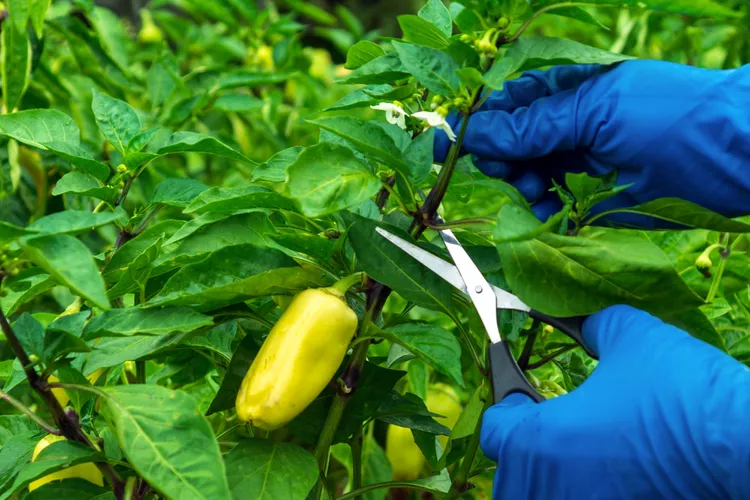
Pepper varieties with smaller fruit, such as habaneros and jalapenos, can grow bushier and produce more branches and peppers if you “top” them after transplanting. To do this, pinch or snip away the top section of the plant, making your cut just above the second or third set of plant leaves above the base of the plant. To avoid spreading diseases, be sure to use sharp pruners sterilized with rubbing alcohol to make your cuts.
Pepper varieties with larger fruit, like cubanelles and bell peppers, generally don’t benefit from topping and you can actually reduce your fruit set by pruning your plants in this manner. However, you can encourage your plants to yield a larger harvest of peppers by pruning away the smaller branches or suckers that grow off the plant’s main Y-shaped stem. Again, use clean pruners to make your cuts and be careful not to damage the plant’s main stem when pruning.
Late Season Pruning
During the growing season, you usually won’t need to prune pepper plants much, other than snipping away leaves near the base of the plant and any stems that show signs of damage or disease. You can also pluck off fruit if it appears too early in the season because very early fruiting can slow your plant’s continued growth.
As fall approaches, encourage peppers to ripen earlier by removing some of the leaves that are shielding your fruit. Just be careful that you don’t remove so many leaves that plant’s ability to photosynthesize is inhibited. A good rule of thumb is no more than a third of the leaves.
While peppers can be eaten when they’re green, their flavor improves as the peppers mature and develop more color, so allowing your peppers to fully ripen on the plant will help you get more flavorful produce.
About 3 to 4 weeks before frost is expected, you can prune a bit harder to focus your plant’s energy towards ripening whatever peppers remain on the plant. Cut away any branches that aren’t bearing fruit. Then clip back all stems and branches by 6 inches or make your cuts right above the uppermost fruit on your plant. This final pruning of the season can help your peppers ripen faster, allowing you to harvest the very last of your homegrown peppers to use in your favorite recipes.