When and How to Harvest Dill for Its Flavorful Leaves, Flowers, and Seeds

20.2K
1.8K
363
2025-11-08
When and How to Harvest Dill for Its Flavorful Leaves, Flowers, and Seeds

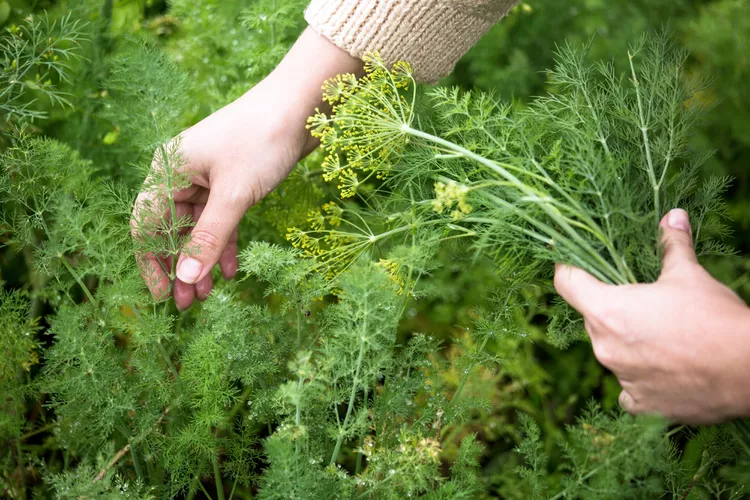
Growing dill is a great way to always have plenty of this tasty herb on hand for flavoring seafood, dips, potato salad, homemade pickles, and other dishes. However, when and how to harvest dill depends on what you want to use it for. Its leaves, flowers, and seeds are all edible and tasty. Enjoy each of these parts of the plant with this simple harvesting guide. Plus get tips on storing your freshly picked dill correctly.

When to Harvest Dill

Dill is a cool-weather herb that bolts in the heat, so plants are typically sown and harvested in spring and autumn gardens. If you want to extend your dill harvest, sow seeds in succession so you can harvest fresh dill in the summer months, too.

Generally speaking, dill is a cut-and-come-again herb that’s harvested little by little as needed for recipes. However, dill plants can be harvested more aggressively before summer and fall frosts since plants won’t survive the heat or extreme cold.

Compared to many other herbs, dill is a fast grower. Plants grown from seed are ready to harvest four to eight weeks after planting. It’s time to start picking dill when your plants are at least 6 inches tall and have at least four to five leaves.

Fresh dill wilts and begins to lose its bright flavor soon after harvesting, so it is best to use dill as soon as possible.

How to Harvest Fresh Dill Leaves

Dill plants have tender stems; they can be harvested with scissors, garden shears, or fingers. However, fresh dill doesn’t last long in the fridge, so it’s best to harvest only as much dill as you can use right away unless you intend to preserve it by freezing or drying.

In some areas, fresh dill can be harvested throughout the season, but the best flavor is obtained if you pick the plants right before they flower. Thoroughly watering dill plants the day before harvesting helps the plants recover faster and washes off the dill leaves, leaving you with a cleaner harvest.

When you’re ready to harvest dill, cut or pinch off the feathery dill leaves at the point where the leaves emerge from the plant’s main stem. Harvest the older outer dill leaves first, leaving the central leaves untouched. Harvesting from the center of dill plants can slow the plant’s growth and cause it to produce fewer leaves.

Like other herbs, dill can be stressed by overharvesting, so never harvest more than a third of the dill leaves at once. If you use a lot of dill in your kitchen, grow multiple dill plants and pick a few leaves from each plant when you harvest. If your plants are about to bolt in summer or be damaged by autumn frosts, clip the entire plant off at the soil line so it doesn’t go to waste.

After harvesting dill, handle stems and leaves as gently as possible to avoid unnecessary damage, and don’t wash dill until you use it. Damage and excess water can speed up decay and make the leaves mushy.

How to Harvest Dill Flowers

When hot weather arrives, dill plants begin to bolt, which means their stems quickly stretch upward and produce flowers, and their flavor changes significantly. Many gardeners pinch off the flowers to extend the dill harvest. The flowers are edible, but they’re essential to leave on the plants if you want to harvest the seeds for pickling and other recipes.

How to Harvest Dill Seeds

To harvest dill seeds, allow the plants to bloom, and then pick the flowers when they begin to brown on the plant and the seeds inside have started to dry and turn a pale brown color. Loosely bundle a few seed heads by their stems with a rubber band and hang the stems upside down in a perforated paper bag in a warm, dry place. Let the herb seeds dry for a week or two until they are easy to shake out of the dill flowers and the seed coats are brittle and break if you try to bend them.

Tips for Storing Dill

Store fresh, homegrown dill in a plastic zipper top bag with a damp paper towel in your fridge's crisper drawer. You can also place cut stems in a glass with an inch or two of water and put a plastic baggy over the leaves to lock in humidity. Replace the water daily, and the dill should stay fresh in the fridge for up to a week.

For longer storage, this herb can be frozen whole or chopped and frozen with water in ice cube trays. Dill can also be dried with a dehydrator or an oven set on its lowest setting. Or dry this herb by loosely bundling stems with a rubber band and hanging them in a warm, dry place until the leaves are completely dried out and easy to crumble with your fingers.

Frequently Asked Questions

  • Does dill grow back after trimming?

    If you harvest dill plants correctly, they will continue to grow and produce more leaves until they flower. Regular harvesting can slow down bolting and cause dill plants to become bushier and produce even more leaves.

  • Should I let dill flower?

    That depends. Once dill flowers, the plants stop producing leaves, and their flavor changes. However, dill flowers are highly attractive to pollinators and other insects, and flowering dill is a fantastic companion plant for natural pest control.

  • What do you do with dill that has flowered?

    Bolted dill tastes a little different, but it’s still usable. Use bolted dill as a garnish or use the stems and leaves to flavor pickle recipes. Another option is to allow the dill plants to continue to grow and harvest the seeds later on.

Related Article

Are Begonias Perennials or Annuals? Here’s What to Know
5.8K
115
41

Are Begonias Perennials or Annuals? Here’s What to Know

If you’re not sure whether begonias are perennials or annuals, we have answers. Most begonias won’t survive winters, but indoor plants can live for years.
How to Plant and Grow Pineapple Lily
47.8K
1.9K
955

How to Plant and Grow Pineapple Lily

Find essential information for growing pineapple lily, a tropical tender bulb with tall, pineapple-like flower spikes.
How to Plant, Grow, and Care for Korean Rock Ferns
46K
1.4K
440

How to Plant, Grow, and Care for Korean Rock Ferns

Learn how to grow and care for Korean rock ferns indoors and out in the garden. Get essential tips on light, watering, fertilizing, and more.
How to Prune Hydrangeas for a Burst of Growth and Color
29.1K
2.3K
232

How to Prune Hydrangeas for a Burst of Growth and Color

The best way to care for hydrangeas depends on the type you have. Learn how to prune hydrangeas, from bigleaf to panicle, to get gorgeous blooms.
Grow Dusty Miller With This Complete Guide
30.7K
613
288

Grow Dusty Miller With This Complete Guide

Dusty miller is an easy-to-grow plant that adds a splash of silver to garden beds and containers. Keep dusty miller thriving with this care guide.
Best Tropical Flowers for Your Patio
28.9K
578
121

Best Tropical Flowers for Your Patio

Outdoor tropical flowering plants can help add drama to your patio. You can leave them outdoors and treat them like annuals, or keep them over winter as houseplants.
How to Propagate ZZ Plants to Grow Your Houseplant Collection
33.5K
670
261

How to Propagate ZZ Plants to Grow Your Houseplant Collection

Follow these simple tips and learn how to propagate ZZ plants from stem cuttings, leaf cuttings, and root division.
How to Plant and Grow Philodendron
11.6K
581
145

How to Plant and Grow Philodendron

Find growing information on philodendron, the perfect houseplant for new plant owners.
Here's What to Plant with Geraniums for Pretty Summer Containers
32.6K
2.6K
443

Here's What to Plant with Geraniums for Pretty Summer Containers

Learn what to plant with geraniums in containers to start a gorgeous container garden. These colorful plants combine well with many other flowers.
Gorgeous Spring Container Gardens
43.3K
3.5K
1.4K

Gorgeous Spring Container Gardens

Celebrate the gardening season with container garden ideas. Buckets, baskets, and spring planting boxes all help create space for a new transition.
How to Make a Pumpkin Succulent Centerpiece
37.5K
3.7K
1K

How to Make a Pumpkin Succulent Centerpiece

Use these simple step-by-step instructions for creating a fall pumpkin succulent planter centerpiece to decorate your dining room table all season.
How to Plant a Wheelbarrow Fairy Garden
43.1K
3.9K
1.8K

How to Plant a Wheelbarrow Fairy Garden

Create a charming miniature landscape in a vintage wheelbarrow that you can move about as you like.
How to Plant Window Boxes Like a Pro
16.8K
504
136

How to Plant Window Boxes Like a Pro

Learn how to plant window boxes, including ideas for what to plant and essential planting tips.
29 of the Best Plants for Trough Gardens
30.7K
2.1K
859

29 of the Best Plants for Trough Gardens

Raised troughs are a great way to grow small drought-tolerant perennials, succulents, and alpine plants. Here are some of the best.
10 Best Lettuce Companion Plants to Grow Together
36K
1.4K
475

10 Best Lettuce Companion Plants to Grow Together

Save space in your garden and grow more fresh produce with these 10 best lettuce companion plants.
Is Parsley a Perennial That Will Grow Back Each Year?
23.7K
709
198

Is Parsley a Perennial That Will Grow Back Each Year?

The answer to the question, "Is parsley a perennial?" is yes and no. Find out what you need to know to get the most of this popular biennial herb in your garden.
How to Plant and Grow Corn in Your Garden
45.9K
2.3K
275

How to Plant and Grow Corn in Your Garden

This guide on how to grow corn includes all the basics on planting, care, pests, harvesting, and best types to grow so you can enjoy the sweetest, freshest ears right from your own garden.
How to Grow Strawberries in Pots
5.2K
156
51

How to Grow Strawberries in Pots

From the best planters to the best plants, this guide includes everything you need to know to grow strawberries in pots.
How to Propagate Rosemary in Soil or Water
41.9K
2.1K
984

How to Propagate Rosemary in Soil or Water

Learn how to propagate rosemary plants from stem cuttings either in soil or water with these step-by-step instructions.
8 Tips for Growing Mint Indoors for a Year-Round Supply of Fresh Leaves
10.6K
952
285

8 Tips for Growing Mint Indoors for a Year-Round Supply of Fresh Leaves

These tips for growing mint indoors include how much light to give them, how frequently to water, and other essential information for the best plants.